The Shipbuilding Soul of The Master Builder’s
Updated: Jan 2
Long before guests arrived with overnight bags and walking boots, they came with oak timbers, naval contracts and the weight of Britain’s ambitions at sea. The Master Builder’s is not inspired by maritime history - it was built for it.

Standing on the banks of the Beaulieu River at Buckler’s Hard, this house was once the home and workplace of Henry Adams, one of the most important shipbuilders of the 18th century. From here, some of the Royal Navy’s most formidable warships were planned, built and launched — vessels that would help shape Britain’s role on the world stage.
A House with a Job To Do
Henry Adams arrived at Buckler’s Hard in 1744, appointed as Master Shipwright at a time when the Royal Navy was expanding rapidly. Over the next sixty years, he would oversee the construction of more than 40 warships, all built along this quiet stretch of river using oak from the surrounding New Forest.
The house that is now The Master Builder’s was never a passive residence. It was a working headquarters: a place where ship designs were drawn, orders issued, payments agreed and progress monitored. From its windows, Adams could look directly onto the slipways where hulls took shape - the river beyond serving as both workplace and proving ground.

Ships That Made History
Among the vessels built under Adams’ supervision was HMS Agamemnon, perhaps the most famous ship to leave Buckler’s Hard. Commanded by Admiral Lord Nelson, she became his favoured ship during the early years of the Napoleonic Wars.
Other ships built here - including Swiftsure, Euryalus and Indefatigable - went on to serve across the globe, their origins tracing back to this small riverside village. It’s a quietly extraordinary thought: that global naval history began in a place that today feels so serene.

A Legacy Woven into the Building
Much has changed since the sound of mallets and saws echoed along the riverbank, but the spirit of the place remains remarkably intact.
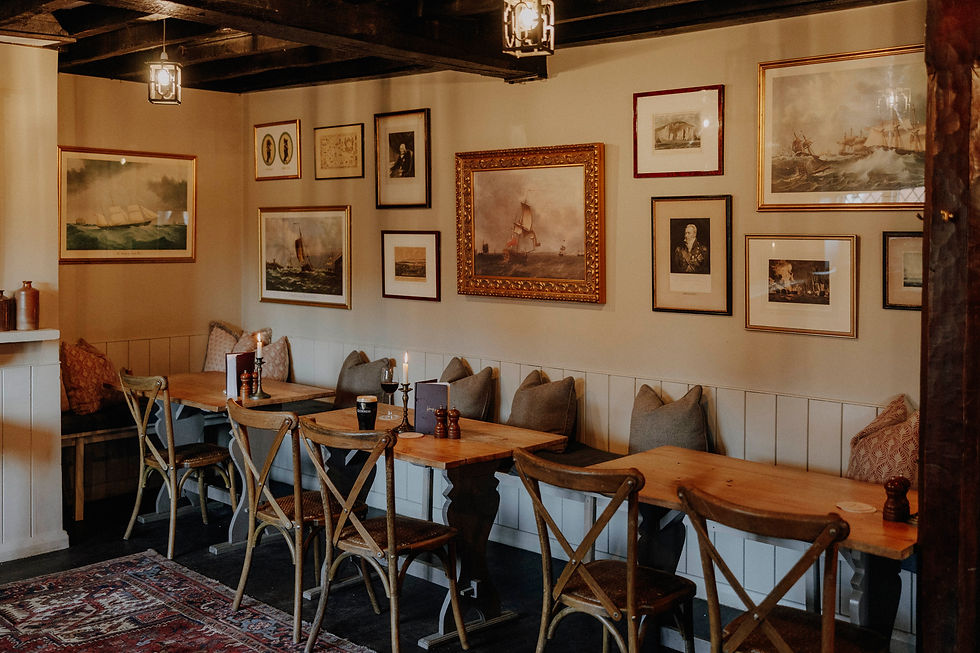
Inside The Master Builder’s, you’ll find subtle nods to its shipbuilding past — from period features that would have framed Adams’ daily life, to maritime details that feel considered rather than themed. Many of the rooms carry names inspired by this heritage, grounding each stay in the story of the building rather than distancing it from it.
Step outside, and the connection becomes even clearer. The river still flows quietly past the house. The slipways are still visible. The village retains its original layout, with the Buckler’s Hard Maritime Museum preserving the story of the craftsmen, labourers and families who made shipbuilding possible here.
History, here, is not decorative. It’s structural.
From Master Shipwright to Master Host
Today, The Master Builder’s has returned to a simpler but deeply connected role: welcoming people in, offering food and a place to rest. There’s something fitting about that continuity. Where Henry Adams once hosted naval officials, craftsmen and visitors connected to the yard, the house now welcomes walkers, sailors, diners and guests drawn by the beauty of the New Forest and the calm of the river.
The work is different. The purpose is much the same.
This has always been a place shaped by craft and care - whether you arrive by river, road, or simply in search of a good night’s sleep.

Comments